Interactive whiteboards are revolutionizing the way we share information and collaborate. At its core, it seamlessly combines touch technology, digital note-taking, cloud sharing, and smart software to transform traditional whiteboards into connected platforms for real-time teamwork. Whether you are an EdTech leader building a digital campus or a corporate procurement manager upgrading smart meeting rooms, Useeworld provides reliable interactive displays and expert solutions tailored to your needs.
Why Interactive Whiteboards Are Replacing Traditional Boards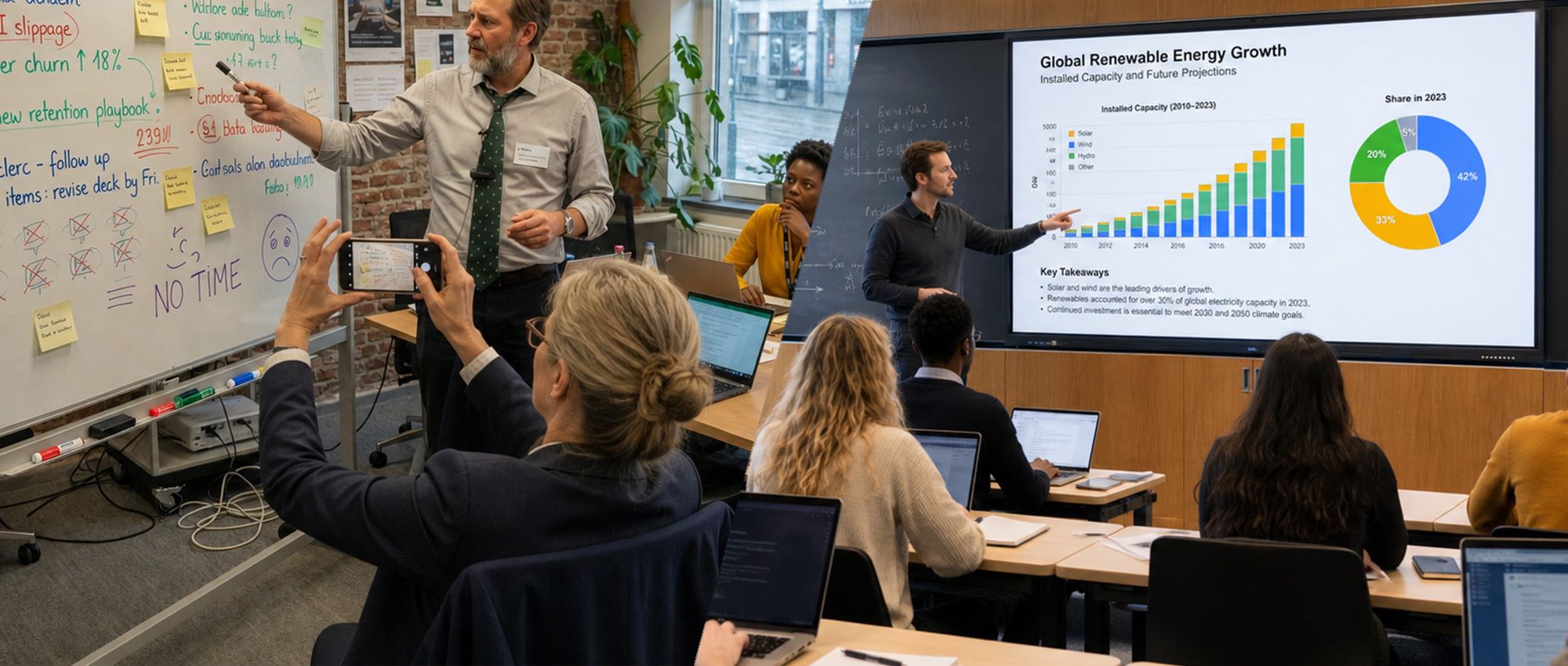
The Hidden Cost of Traditional Whiteboards
The main limitation of traditional whiteboards isn't the writing experience—it's data loss. Every time a board is erased, valuable ideas disappear. Snapping photos of meeting notes is highly inefficient. Today, this outdated method simply cannot meet the demands of modern schools and smart offices that require instant digital saving and seamless remote collaboration.
Surging Market Demand & Trends
Interactive displays are rapidly becoming the new standard. According to industry reports, the global interactive whiteboard market is projected to reach $730 million by 2030, growing at a solid CAGR of 7.3%.
When choosing the right equipment, size matters:
Key Drivers of the Smart Upgrade
The US market alone is forecast to grow from $158 million in 2024 to $261 million by 2033 (a 5.71% CAGR), driven primarily by the education and corporate sectors. This transition is heavily accelerated by the ongoing digital transformation, the rise of hybrid work models, and the integration of AI technology into smart meeting tools.
How Do Interactive Whiteboards Work?
Before diving into why interactive whiteboards are essential, it is crucial to understand the technology behind them. The internal hardware architecture dictates the overall user experience and should directly guide your purchasing decisions.
Touch, Stylus, and Multi-User Input
The input layer is the heart of any modern interactive display. Today’s smart boards primarily rely on three core touch technologies to capture handwriting and gestures:
Infrared (IR) Touch: Reliable and cost-effective, widely used in standard setups.
Capacitive (PCAP) Touch: Highly sensitive and sleek, offering a smartphone-like experience.
Digital Vision Touch (DVT): Uses optical cameras for precise multi-touch tracking
Among these, Infrared (IR) touch is the most widely used in the education sector. Known for its durability, it works with almost any writing object and supports up to 16-point multi-touch. This enables multiple students or team members to write on the board simultaneously. No special stylus is required—users can simply use a finger or any solid object, making it effortless for anyone to start writing. Smart gesture recognition further streamlines the process: you can write with one finger, select with two, and erase with your palm. The entire workflow is incredibly intuitive.
Built-in Software and Smart Tools
The software ecosystem sits seamlessly on top of the hardware. Mainstream interactive whiteboards come equipped with built-in tools for teaching and corporate meetings, including an infinite canvas, multimedia annotation, live polling, timers, and screen recording.
Useeworld provides an interactive education toolkit designed to streamline lessons. Through a single interface, teachers can present slides, add real-time annotations, run quizzes, and share materials, drastically reducing prep time. For corporate settings, AI meeting assistants automatically handle transcription, translation, and summaries, allowing participants to focus on decision-making rather than note-taking.
Cloud Access and Real-Time Sharing
Through cloud synchronization, an interactive display transforms a single meeting or class into a searchable digital asset. Users can instantly save whiteboard sessions as PDFs or images. These files are shared directly to attendees' devices via email or QR codes. Additionally, wireless screen sharing allows remote participants to view and interact with the same digital canvas, enabling true cross-border collaboration.
Key Benefits for Modern Classrooms and Workspaces
What measurable value do these features bring to actual workspaces?
Highly Efficient Real-Time Collaboration: Traditional meetings are a one-way flow of information. Interactive boards break this barrier. Any attendee can step up and interact with the screen, boosting brainstorming quality. In a hybrid work model, screen mirroring ensures remote workers share the same workspace, eliminating the gap caused by physical distance.
Instant Note Saving and Sharing: Organizing notes from a 90-minute meeting typically takes 30 to 60 minutes. With a smart board, all content is exported as structured files the moment the meeting ends and delivered to all participants in seconds via QR code. This saves massive amounts of time for high-frequency team collaboration.
Engaging Teaching and Presentations: Capturing student attention is the top priority for EdTech. Compared to static slides, displays that support dynamic content, direct interaction, and video integration naturally keep classrooms focused. Smart software (like IQClass One) includes live polling, random name selection, and interactive games, turning passive listening into active learning.
Cleaner, Flexible Workflows: Dust, odors, and dried-out markers are the hidden costs of traditional boards. Interactive displays eliminate the need for markers and erasers entirely. Furthermore, modular content management standardizes workflows—a highly valuable feature for institutions deploying displays across multiple rooms at scale.
Common Use Cases for Interactive Whiteboards
Once the core value is clear, exploring specific use cases helps buyers match their unique requirements with the right interactive solution.
K-12 & Higher Education Classrooms
Schools and universities are the primary adopters of this technology. With interactive whiteboards for classrooms, educators can visually demonstrate math problems step-by-step, play embedded videos, and explore interactive maps or scientific simulations. Students can walk up to the front to interact directly with the screen, or participate remotely using their connected devices.
For Useeworld’s global education clients, successful deployments range from single smart board setups in standard classrooms to comprehensive, campus-wide smart classroom solutions.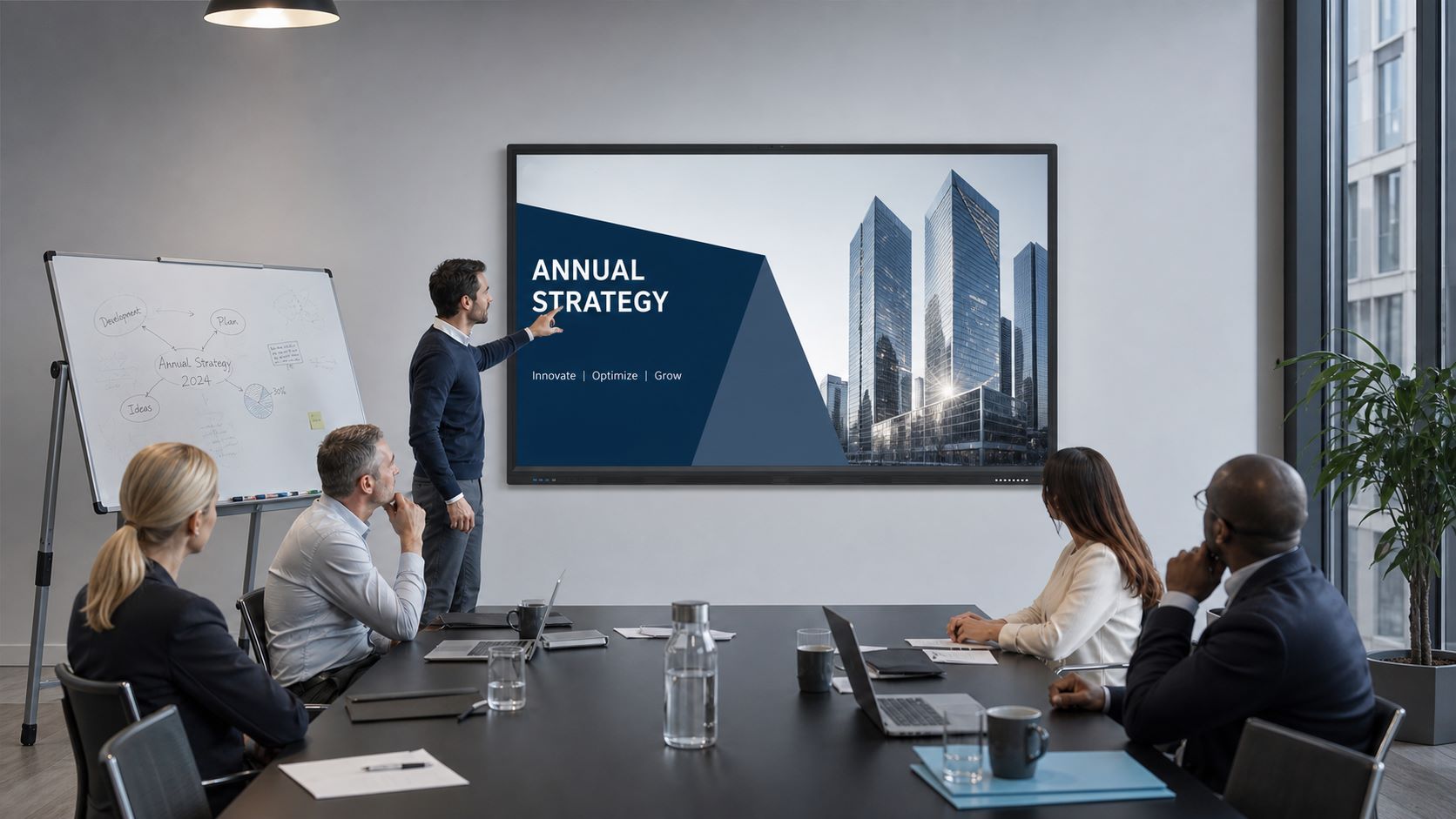
Corporate Meetings & Smart Boardrooms
In enterprise environments, efficiency is everything. The core demands for a corporate interactive whiteboard are instant startup, seamless BYOD connectivity, and real-time content sharing.
Hybrid Work & Remote Collaboration
Hybrid work represents the most significant shift in modern business. Today, the deep integration of interactive displays and video conferencing systems has become the standard for smart meeting rooms. Through wireless screen sharing, any laptop, tablet, or smartphone can connect instantly, completely eliminating device and platform compatibility barriers.
Interactive Whiteboards vs. Traditional Whiteboards
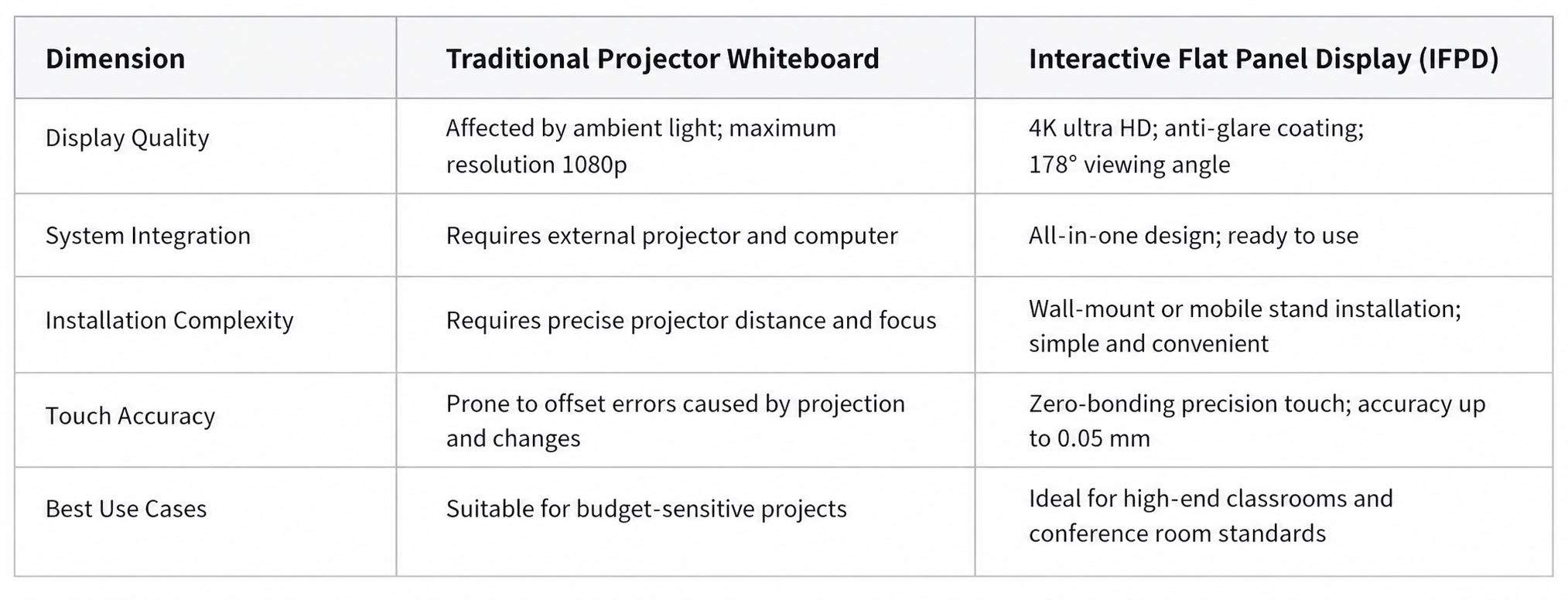
To help buyers make an informed decision, the table below compares smart interactive boards with traditional whiteboards across six key dimensions, providing a clear value reference: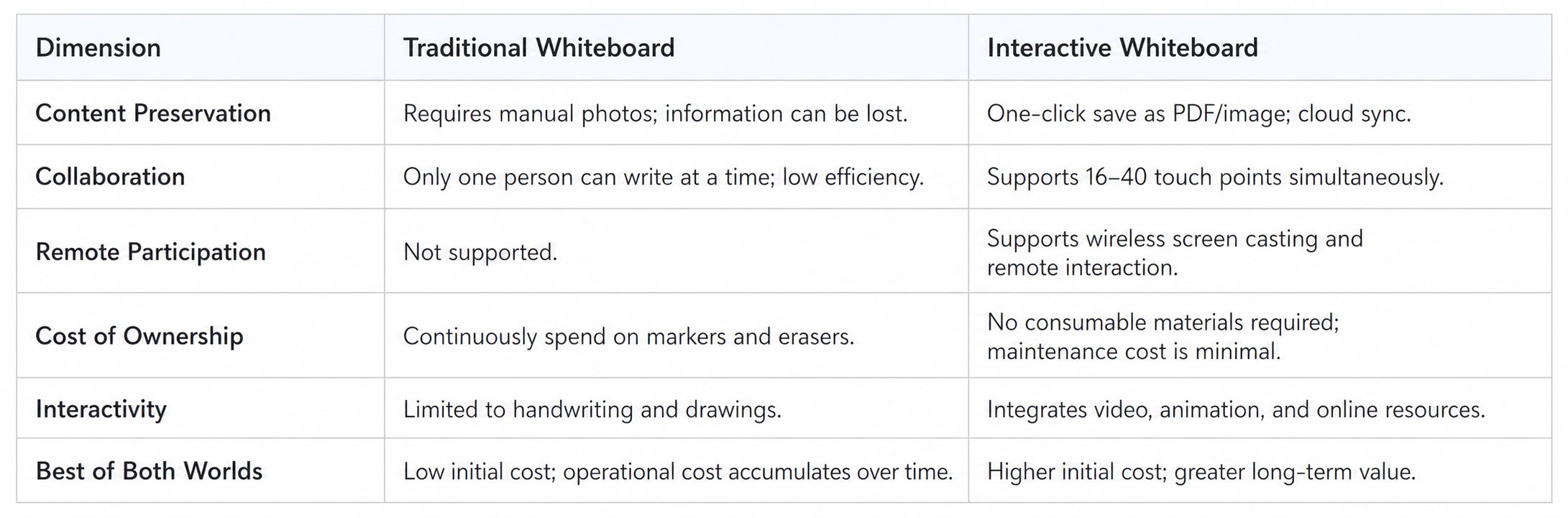
Interactive Whiteboards (IWB) vs. Interactive Flat Panels (IFPD)
In the market, the terms Interactive Whiteboard (IWB) and Interactive Flat Panel Display (IFPD) are often used interchangeably. However, their technical architectures are fundamentally different—a distinction that should directly guide your purchasing decision.
Key Features to Consider Before Buying
The core buying logic is simple: prioritize actual needs over raw technical specs. Once you define your use case and room size, evaluate your options across these key dimensions:
Screen Size and Display Quality: Size dictates viewing distance. Typically, 75 to 86-inch displays are ideal for standard classrooms or mid-sized meeting rooms (under 30 people). For large lecture halls, 98-inch screens or larger are recommended. Look for 4K UHD resolution paired with optical bonding technology to eliminate glare and parallax, ensuring crystal-clear visibility even in bright environments.
Writing Accuracy and Touch Response: Writing precision is a highly noticeable daily metric. The display should offer sub-millimeter accuracy and high-speed touch tracking to guarantee a smooth, zero-latency writing experience.
Device and Software Compatibility: Smart workspaces require mixed-hardware environments. Seamless compatibility with multiple operating systems—especially Dual OS (Windows and Android)—is crucial for effortless BYOD (Bring Your Own Device) integration.
Future Trends: What's Next?
Understanding technological trends is a better guide for long-term ROI than just looking at current product specs.
Are Interactive Whiteboards Worth the Investment?
From an ROI (Return on Investment) perspective, the answer is clear: For any teaching or meeting space used more than twice a day by over 10 participants, an interactive whiteboard is a highly worthwhile investment.
Below is a typical decision-making framework for procurement managers:
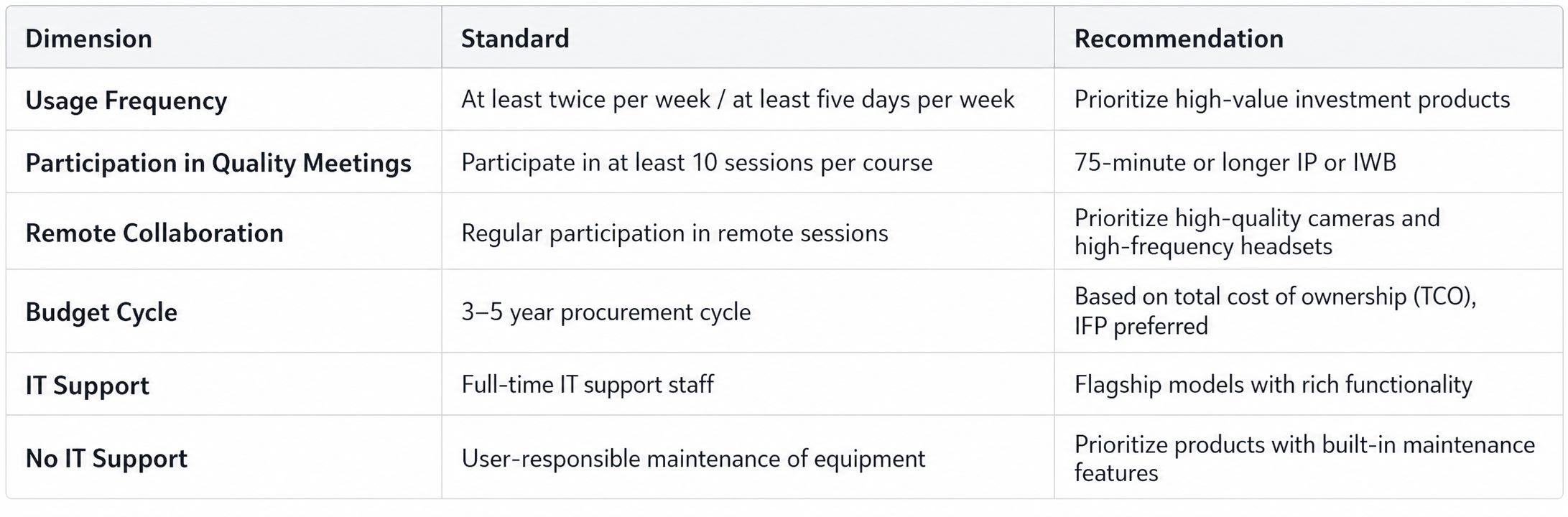
Crucially, an interactive display should not be evaluated as a standalone device. Its true value is fully unlocked only when it serves as the central hub of a comprehensive smart classroom or smart meeting room solution.
Final Thoughts on the Future of Interactive Whiteboards
The evolution of the interactive whiteboard is clear: it has transitioned from a basic digital replacement to a dynamic collaboration hub, and now into an AI-driven smart display.
For schools and enterprises planning a digital transformation, now is the ideal time to strategically adopt this technology. The reason isn't simply to follow market trends. It’s because modern interactive panels are finally mature enough to solve real business challenges while delivering a highly measurable Return on Investment (ROI).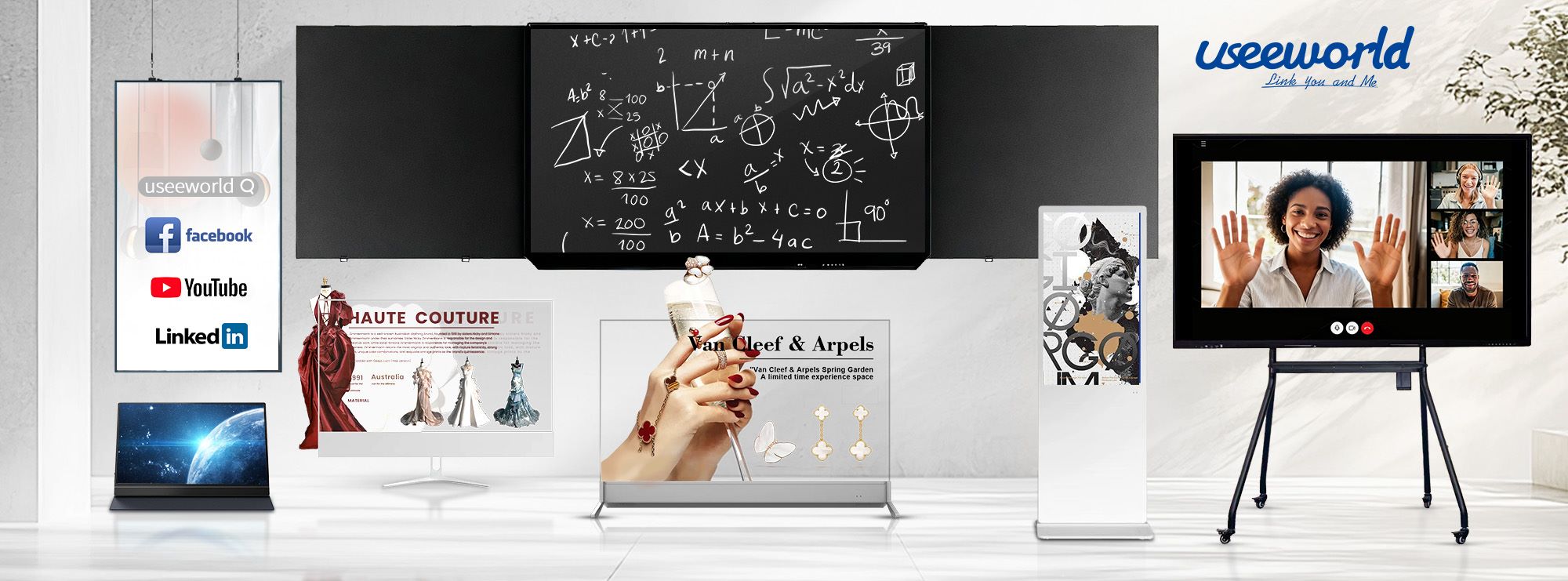
Upgrade Your Workspace with Useeworld
As a leading provider of interactive display solutions for the education and corporate sectors, Useeworld offers a comprehensive product lineup. From standalone interactive flat panels to complete smart classroom solutions and smart meeting room systems, we specialize in custom designs and bulk orders tailored to your project scale.
If you are equipping a school, training center, or corporate office, the Useeworld expert team is here to help. Simply share your deployment scale, specific use cases, and budget to receive tailored product recommendations and a competitive project quote.
Contact Us Today
Have questions or need personalized advice? Our team is ready to help you find the perfect interactive solution.


